Once upon a time, in the midst of a bustling city, there lived a group of flowering cherry trees. These trees were happy to line both sides of the street, adding to the beauty of their neighborhood. They stood proud and tall, and every spring, at the first sign of warmth, they would begin to sprout lovely blossoms in various shades of pink. Every summer the blossoms would give way to an abundance of leafy green. And every autumn, their leaves would turn a soft yellow before gently tumbling to the ground. All the trees fell into this predictable, comforting rhythm ~ all except for the strange little tree at the end of the street who had this odd habit of blossoming in the fall and dropping her leaves in the spring. Truth be told, most of the time she was blossoming and dropping leaves at the same time. Crazy tree.
Understandably, The Crazy Tree's idiosyncracies did not endear her to the other trees. Because she resisted the pre-ordained schedule of blossoming, leafing, and shedding by marching to a different drummer ~ if such a thing can be said of a tree ~ she made the other trees somewhat uncomfortable. But for the most part they were far too preoccupied with their well-choreographed lives to pay much attention to the disheveled outcast.
Still, they couldn't help but notice that there was something special about The Crazy Tree. It was hard to describe, but it seemed that while they were reasonably happy, The Crazy Tree was alive. Or maybe awake was a better word. The Crazy Tree seemed to know something that the others refused to acknowledge: that life doesn't happen on schedule. And sometimes ~ well, actually, most of the time ~ she would tell the other trees: we are dying and birthing at the same time, letting go and welcoming in the new in a crazy, colorful, blossoming, leaf-dropping dance of life. The Crazy Tree would get so excited when she was talking about this that she would sprout a blossom and drop a leaf just to make her point.
Over the years, the neighborhood association became more and more dismayed by The Crazy Tree's appearance which did not begin to meet their standards of beauty and conformity. And so ~ as often happens to those who challenge our pre-conceived notions of how life is supposed to be ~ The Crazy Tree was killed, cut down before her time on a sunny summer afternoon. Most of the other trees, along with the president of the neighborhood association, were pleased to be rid of this blight on their urban landscape.
But the many walkers and runners who had come to know and love The Crazy Tree.were deeply saddened when they discovered that she was no longer there. It didn't take long for them to realize, though, that her spirit was still very much alive; so they started to come by to sit on her stump, just to feel her presence. They claim it is a magical place, a place of crazy wisdom, and every so often, when the wind is just right, they swear they can hear her voice whispering to them. Lately, she's been chanting Rumi:
Dance, when you're broken open. Dance, if you've torn the bandage off. Dance in the middle of the fighting. Dance in your blood. Dance, when you're perfectly free. ________________________________________________ crazy tree (árbol loco)
Había una vez, en medio de la ciudad, un grupo de cerezos florecientes. Estos cerezos estaban felices de decorar ambos lados de la calle, compartiendo su hermosura con su vecinidad. Se pararon ahí orgullosos y altos, y cada primavera, al primer indicio del calor, brotaban bellas flores rosas. Cada verano las flores daban lugar a la abundancia de hojas verdes; y cada otoño, las hojas se ponían un bello tono de amarillo antes de caerse suavemente al suelo. Todos los cerezos siguieron este ritmo confortante y estable ~ todos menos el arbol extraño al final de la calle, quien tenía el hábito raro de brotar flores en el otoño y dejar caer sus hojas en la primavera. A decir verdad, la mayoría del tiempo brotaba y dejaba caer sus hojas a la vez. Crazy tree.
No hace falta decir que las idiosincrasias de la Crazy Tree no le granjearon el cariño de los otros árboles. Ya que resistió el horario de brotar flores, echar hojas, y dejarlas caer, moviendo contra la corriente (si se podría decir eso acerca de un arbol) ~ la Crazy Tree hizo que los otros árboles se sintieran un tanto incómodos. Pero por lo general estaban demasiado preocupados con sus vidas bien planeadas para prestar mucha atención a esta paria desarrapada.
Pero no podían dejar de notar que la Crazy Tree tenía algo especial. Era difícil de describir, pero parecía que mientras ellos se sentían más o menos felices, la Crazy Tree estaba viva. O quizás despierta fuera mejor descripción. Parecía que la Crazy Tree sabía algo que los otros se negaron a reconocer: que la vida no sucede según un horario. Y a veces ~ pues, la verdad es que la mayoría del tiempo ~ ella les decía: estamos muriendo y naciendo al mismo tiempo, soltando las cosas y acogiendo lo nuevo en un baile loco y apasionado, lleno de flores rosas y hojas caídas. Al hablar de esto, la Crazy Tree se entusiasmaba tanto que brotaba una flor y dejaba caer una hoja para dar énfasis a su argumento.
Con el paso de los años, la asociación de la vecinidad se puso más impaciente con la apariencia de la Crazy Tree ya que no cumplía con los requisitos de la hermosura y la conformidad. Y sucedió ~ como frecuentemente les pasa a los que desafían las ideas pre-concebidas de cómo debe ser la vida ~ que mataron a la Crazy Tree, talada antes de tiempo en una tarde soleada de verano. La mayoría de los otros árboles, juntos con el presidente de la asociación de la vecinidad, se sintieron felices de estar libres de esta fealdad en su paisaje urbano.
Mientras tanto, muchas de las personas que caminaban o corrían por la vecinidad habían llegado a conocer y amar a la Crazy Tree y se sintieron profundamente tristes cuando descubrieron que ya no estaba ahí. Pero no pasó mucho tiempo antes de que se dieran cuenta que su espíritu todavía estaba muy vivo; así que empezaron a pasar por ahí a sentarse en su tocón para sentir su presencia. Dicen que es un lugar mágico, un lugar lleno de la sabiduría loca, y que de vez en cuando, cuando el viento es leve, soplando desde el sur, juran que pueden oír su voz, susurrándoles. Últimamente, ha estado cantando versos de Rumi:
Baila cuando estás roto como un jarro abierto Baila cuando te has agarrado la venda Baila en medio de la pelea Baila en tu sangre Baila, cuando estés perfectamente libre.
Blame it on Emily. I was reading her sabbath poem, and it came alive. Just like that.
Some keep the Sabbath going to church ~ I keep it, staying at Home ~ With a Bobolink for a Chorister ~ And an orchard, for a Dome. Some keep the Sabbath in Surplice ~ I just wear my Wings ~ And instead of tolling the Bell, for Church, Our little Sexton ~ sings. God preaches, a noted Clergyman ~ And the sermon is never long So instead of getting to Heaven, at last ~ I'm going all along. (Emily Dickinson, #324)
I find myself dancing around my house and I can't stop smiling, swaying to music only I can hear. It's a little crazy, and oh, so wonderful. The sun is streaming through the windows on this crisp autumn morning and, as Emily describes, the birds are singing ~ though I think they are mostly doing it to torment the cat, who indulges them by chirping, kitty-style, right back at them. But I am not paying them much attention, because I am dancing and I can't stop smiling. No orchard here. In its place, my blessed home space, where movements of spirit and soul percolate, to emerge in tangible form. People, experiences, challenges of the past week become the melody ~ that is, until Leonard Cohen comes to visit. Then the sultry Dance Me to the End of Love starts to play.
Dance me through the panic till I'm gathered safely in . . .
The layers of my challenging-joyful week are starting to fall away. I am dancing and I can't stop smiling. It goes on and on. There have been notable partners throughout my life, but today, on this crone's sabbath, the dance is all mine.
In Jon Stewart's film, Rosewater, there is a striking scene in which Iranian journalist Maziar Bahari (portrayed by Gael García Bernal) is dancing around his prison cell, having just found out that he will soon be freed. The song in his head ~ you guessed it ~ is Dance Me to the End of Love.
It's an extraordinary thing to truly rest, to feel the heaviness lift and to remember, in the depths of our souls, who we are. Maziar's prison was terrifying and very, very real. Our prisons are often symbolic: prisons of excessive responsibility, of overwork and worry, competition and incessant connectivity. The Sabbath challenges us. Taste freedom. Rest. Breathe. Look around you and savor. If you do, you may find that you will be able to greet the morn with hope and a renewed spirit.
__________________
crone's sabbath
(domingo de la "crone", palabra que significa mujer madura y sabia)
Échale la culpa a Emily. Leía su poesía sobre el domingo (Sabbath, día de descanso), y se hizo viva. Así no más.
Algunos guardan el domingo yendo a la iglesia ~ Yo lo guardo quedándome en Casa ~ Con un tordo como Cantor ~ Y un manzanar por Santuario. Algunos guardan el domingo en vestes blancas ~ Yo sólo utilizo mis alas ~ Y en vez del replicar de las campanas de la iglesia ~ Nuestro pequeño sacristán canta Dios predica, un predicador admirable ~ Y el sermón es siempre corto ~ Así, en vez de ir al Cielo, al final ~ Voy llegando en todo momento.
(Emily Dickinson, #324)
Me encuentro bailando por mi casa y no puedo dejar de sonreír, moviéndome suavemente a la música que sólo yo puedo oír. Es un poco loco, y tan maravilloso. El sol brilla por las ventanas en esta mañana fresca de otoño y, como lo describe Emily, los pájaros están cantando ~ pero creo que lo hacen principalmente por molestar al gato, que les responde piando, a su manera. Pero no les hago mucho caso, porque estoy bailando y no puedo dejar de sonreír. No hay manzanar aquí. En su lugar, mi hogar bendito, donde los movimientos del espíritu y del alma se cocinan a fuego lento, para salir en forma tangible. Personas, experiencias, desafíos de la semana pasada se vuelven melodía ~ hasta que Leonard Cohen llega a visitar. Entonces la canción seductora, Baílame hasta el final del amor, empieza a sonar.
Baílame a través del pánico y ponme a salvo . . .
Las capas de mi semana feliz-exigente empiezan a caerse. Estoy bailando, y no puedo dejar de sonreír. Bailo y bailo. He tenido parejas notables en mi vida, pero hoy, en este domingo de la crone, la danza es toda mía.
En el film de Jon Stewart, Rosewater, hay una escena impresionante, en que el periodista iraní, Maziar Bahari (representado por Gael García Bernal) está bailando en su celda; acaba de enterarse de que pronto se va a liberar. La canción en su mente ~ ya lo adivinaste ~ es Baílame hasta al final del amor.
Es algo extraordinario, verdaderamente descansar, sentir que el desasosiego se levanta y recordar, en las profundidades de nuestras almas, quienes somos. La prisión de Maziar fue aterradora y muy, muy real. Nuestras prisiones son, muy a menudo, simbólicas: prisiones de la responsabilidad excesiva, de demasiado trabajo y ansiedad, de la competencia y la conectividad incesante. El Sabbath (domingo) nos desafía. Prueba la libertad. Descansa. Respira. Mira alrededor de ti y saborea lo que ves. Si lo haces, puede que descubras que podrás saludar al nuevo día con esperanza y un espíritu renovado.
I could not remember where it was. In the early December darkness, I lit the first candle on my Advent wreath. Thinking of the slaughter in San Bernardino, I realized with a start that I simply could not recall where the previous mass shooting had happened. It had been earlier in the week ~ I remember holding my breath when I saw the headline this time. Please, God, not another one. I found my self completely disoriented. Longing to get my bearings, but resisting the urge to step away from the candle to go google the forgotten information, I chose instead to remain in the uncertainty of the moment. This was not a comfortable place to be. So many shootings. I could not remember. I have a bumper sticker on my car that reads: I REFUSE TO LIVE IN FEAR. People have come up to me in parking lots to thank me for it. It's almost an "aha moment" for them when they read it: "Yes, that's it! That's what I've been feeling. Thank you for the words." It appears that our societal default setting is to pour gasoline on the flames of fear when they rise up. Bombarded with information ~ much of it unsettling ~ we hunch over our devices with heads down and thumbs at attention, ready to react NOW. And react we do: no reflection or time to actually feel ~ just finger pointing and shared (with "friends"!) incendiary commentary, memes, and articles. Flames of fear burn through any possibility of discourse and mutual respect. Buddhist teacher Pema Chodron talks about the power of the pause ~ not just when faced with fear, but in any situation in which we are tempted to respond throughtlessly and automatically. Pausing is a way to really feel the energy of the situation ~ and when it's threatening energy, that requires some determination and courage. If we stay put (and look up from the device and out at the world), we may see the possibility of reacting in a different way. This is a big part of refusing to live in fear, and it means saying yes to living in openness and curiosity. Lately, Naomi Shihab Nye's beautiful poem, Kindness, has been rattling around in my heart. One line, in particular, has become almost a mantra, whenever I find myself afraid of another person or group of people: You must see how this could be you . . . I have been struck by how quickly my fear is defused when I name this simple fact, when I actively remind myself of the mystery of our shared destiny and interconnectedness. It is even more powerful when I extend it to our Mother Earth. When I say it and mean it, it changes everything, and calms my heart. Here's the poem: Before you know what kindness really is you must lose things, feel the future dissolve in a moment like salt in a weakened broth. What you held in your hand, what you counted and carefully saved, all this must go so you know how desolate the landscape can be between the regions of kindness. How you ride and ride thinking the bus will never stop, the passengers eating maize and chicken will stare out the window forever. Before you learn the tender gravity of kindness, you must travel where the Indian in a white poncho lies dead by the side of the road. You must see how this could be you, how he too was someone who journeyed through the night with plans and the simple breath that kept him alive. Before you know kindness as the deepest thing inside, you must know sorrow as the other deepest thing. You must wake up with sorrow. You must speak to it till your voice catches the thread of all sorrows and you see the size of the cloth. Then it is only kindness that makes sense anymore, only kindness that ties your shoes and sends you out into the day to mail letters and purchase bread, only kindness that raises its head from the crowd of the world to say It is I you have been looking for, and then goes with you everywhere like a shadow or a friend. Kindness, by Naomi Shihab Nye (Written in Colombia) And so I remember. That most people are decent and good. That they have dreams and hopes and challenges, sadness and joy. I'm not afraid when I remember this; instead, I feel empowered to love and to care. It is not Advent anymore. In fact, Ash Wednesday just passed. In spite of my current status as a marginal Catholic, I received the black smudge of ash on my forehead as a stark reminder that we are only passing through ~ to dust we shall return. And if we want to take full advantage of our stay on this beautiful orb, it's good to remember (paraphrasing part of the Ash Wednesday reading from Second Corinthians): Now is the acceptable time to refuse to live in fear. Now. _______________________________________ me niego a vivir en el miedo
No pude recordar dónde fue. En la oscuridad de diciembre, encendí la primera vela en mi corona de Adviento. Recordando la matanza en San Bernardino, me di cuenta de que no recordaba dónde había ocurrido la balacera antes de ésta. Sucedió la semana pasada ~ recuerdo que contuve el aliento cuando vi el titular esta vez. Ay, Dios, por favor, que no haya pasado otra vez. Me sentí perdida. Queriendo orientarme, pero resistiendo el deseo de dejar la vela para googlear la información olvidada, me quedé en la incertidumbre del momento. Fue un lugar sumamente incómodo. Tantas balaceras. No pude recordar. Tengo una calcomanía en mi coche que dice: ME NIEGO A VIVIR EN EL MIEDO. A veces la gente que la ve se acerca para agradecerme. Es casi un "momento ajá" para ellos cuando lo leen: "Sí, eso es! Es lo que he sentido. Gracias por las palabras." En la sociedad moderna, solemos echar la gasolina a las llamas del miedo. Bombardeado con demasiada información ~ muchas veces inquietante ~ nos quedamos como hipnotizados, mirando nuestros teléfonos inteligentes, con los pulgares en la posición firme ~ listos para reaccionar INMEDIATAMENTE. Y sí, reaccionamos: sin la reflexión o el tiempo para sentir profundamente, vuelan por todos lados las opiniones, memes, y artículos incendiarios (compartidos con "amigos"!). Las llamas del miedo destruyen cualquier posibilidad de conversación o respeto mutuo. La maestra budista, Pema Chodron, habla del "poder de la pausa" ~ no solamente cuando nos enfrentamos al miedo, sino también en las situaciones en que nos sentimos tentados a responder automáticamente y sin reflexión. Detenernos (o practicar la pausa) es una manera de sentir, realmente, la energía de la situación ~ y cuando es una energía amenazadora, se requiere algo de determinación y coraje. Si nos quedamos en el momento ~ levantando la mirada de las distracciones ~ podemos ver la posibilidad de reaccionar de una manera nueva y diferente. Negarse a vivir en el miedo es vivir con el espíritu abierto y con la curiosidad. Últimamente, la hermosa poesía de Naomi Shihab Nye, Bondad, ha estado ocupando mi corazón. Un verso, especialmente, se ha hecho casi una mantra, siempre que me encuentro temiendo a otra persona o grupo de personas. Debes ver como ése podrías ser tú. Me ha impresionado qué tan rápido se calman mis miedos cuando digo esta simple frase, cuando me recuerdo activamente del misterio de nuestro destino compartido y nuestra interconexión. Es más poderoso aún cuando lo extiendo a nuestra Madre Tierra. Cuando lo digo, cambia todo. Aquí está la poesía: Antes de saber lo que realmente es la bondad debes perder cosas sentir que el futuro se disuelve en un momento como la sal en un caldo. Lo que sostenías en tu mano, aquello con lo que contabas y cuidabas, todo debe irse para que sepas qué tan desolado puede ser el paisaje entre las regiones de bondad. Antes de conocer la suavidad de la bondad, debes viajar donde el indio con un poncho blanco yace muerto al lado del camino. Debes ver como ése podrías ser tú, como él también era alguien que viajaba por la noche con planes y el simple aliento que lo mantenía con vida. Antes de reconocer la bondad como lo más profundo de tu interior, debes conocer la tristeza como la otra cosa más profunda. Debes despertar con dolor. Debes hablar con él hasta que tu voz capte el hilo que enlaza la trama de todos los pesares y descubras el tamaño de la tela. Entonces es sólo la bondad que tiene sentido, sólo la bondad que ata los cordones de tus zapatos y te envía al día a mandar cartas y comprar pan, sólo la bondad que alza su cabeza sobre la muchedumbre a decir Es a mí quien has estado buscando, y entonces te acompaña por todos lados como una sombra o un amigo. Bondad, por Naomi Shihab Nye (Escrito en Colombia) Y recuerdo: que la mayoría de las personas son decentes y buenas. Que tienen sueños y esperanzas y desafíos, tristezas y alegrías. Pierdo el miedo cuando pienso así, y me siento capaz de amar verdaderamente. Ya pasó la estación litúrgica de Adviento, y la semana pasada llegó el Miércoles de Ceniza. A pesar de ser, actualmente, una católica marginal, recibí la mancha negra de las cenizas en mi frente, como recuerdo de que sólo estamos pasando por este mundo, que todo es transitorio ~ al polvo volveremos. Y si queremos aprovecharnos de nuestra estancia en este bello planeta, nos conviene recordar (parafraseando una parte de la lectura del Miércoles de Cenizas de 2 Corintios): Ahora es el tiempo aceptable para negarse a vivir en el miedo. Ahora.
Either you will go through this door or you will not go through. If you go through there is always the risk of remembering your name.
Things look at you doubly and you must look back and let them happen.
If you do not go through it is possible to live worthily
to maintain your attitudes to hold your position to die bravely
but much will blind you, much will evade you, at what cost who knows?
The door itself makes no promises. It is only a door.
Adrienne Rich, Prospective Immigrants Please Note
The requirement was simple enough: Take Texas State History within a year of starting my teaching job in El Paso and my New Mexico teacher's certificate would magically morph into a Texas certificate, good for life (yes, those lifetime certificates were still in existence way back in 1979 . . . ). The thought of taking such a brain-numbing class did not make me happy, but I was resigned to the fact that I needed to do it. So when the second semester rolled around ~ having survived my first few months of teaching in fine form ~ I wandered over to UTEP to enroll in the dreaded class. It was the sensible thing to do. It was important for my future.
And I might just have done it had I not noticed the graduate-level class on Don Quijote being offered on the very same night ~ one of the classes I hadn't had time to take when I was an undergraduate Spanish major. My heart started to sing when I thought of delving into The Quijote ~ this compared to a huge heart-thud when contemplating the history class.
Because I chose to go riding with the passionate caballero de La Mancha, I did not get my lifetime Texas Teaching Certificate that year. Instead, I got to soak up one of the great works of world literature, learning on an academic level about the satire implicit in the work, but also allowing the story itself to speak to my soul. I will never forget those long-ago Monday nights in Dr. Bagby's classroom because I learned something that would inform the rest of my life: that I, like the crazy Don Quijote, love to travel through life seeking adventures and listening to people's stories. I am not speaking of some sort of quixotic quest, with the goal of rescuing people in distress. Instead I'm referring to the simple act of being present and listening well to the stories of those I encounter on my path, and opening myself to the possibility that some of those stories have the power to change me ~ and others ~ in some mysterious way. I was just starting to develop this aspect of my character at the time and I sometimes wonder how my life might have been different had I not been paying attention on that winter afternoon when I was supposed to be signing up for Texas State History. Anachronistically speaking, what if I'd been texting or tweeting or updating my Facebook page? Hmmmmm . . .
I call him Amigo. For more than 100 years he has, along with his brother, resided at the entrance to Wright Park, which just happens to be the end of my running route. I sometimes ponder all the changes these two regal beasts have witnessed during their reign (I confess that I often imagine them to be sentient beings). Because of this I have developed an eccentric little ritual to mark the end of my runs, patting each of them on the paws and then rubbing Amigo's nose and greeting him with a meow. I swear sometimes he winks at me.
I do not know if anyone has ever witnessed this. I've certainly never mentioned it to anyone, for obvious reasons. Until now.
Last week I ended up walking around the park before heading to work. I was pondering this post, actually, thinking about awareness and attentiveness. By the end of the walk, though, I was so totally preoccupied with work concerns ~ Distraction 1, Attentiveness 0 ~ that I barely stopped to pat Amigo's nose. But rituals are rituals (I can hear some of you saying that perhaps this is more OCD) and I noticed something remarkable when I stopped. A little sign, held by two plastic soldiers, carefully laminated, had been placed by his back paws. I leaned in to read it.
I don't know who put it there or why. I only know that the synchronicity of me seeing it on a very distracted day continues to amaze me.
I think it pisses God off when you walk by the color purple in a field and don't notice it. Shug in The Color Purple (Alice Walker) She calls them The Three Poisons, referring to the messy emotional stuff in our lives. She is Buddhist nun Pema Chodron, prolific author and one of my favorite teachers because of her down-to-earth, non-dogmatic approach to all things spiritual. She identifies three main poisons that are constant traps: passion (craving), aggression (aversion), and ignorance (couldn't care less) and explains:
Addictions of all kinds come under the category of craving, which is wanting, wanting, wanting ~ feeling that we have to have some kind of resolution. Aversion encompasses violence, rage, hatred, and negativity of all kinds, as well as garden-variety irritation. And ignorance? Nowadays, it's usually called denial.
To illustrate the poisons she uses this wonderful example:
When you feel craving, you could be sitting on the edge of the Grand Canyon, but all you can see is this piece of chocolate cake that you're craving. With aversion, you're sitting on the edge of the Grand Canyon, and all you can hear is the angry words you said to someone ten years ago. With ignorance, you're sitting on the edge of the Grand Canyon with a paper bag over your head. Pema Chodron, Comfortable with Uncertainty: 108 Teachings on Cultivating Fearlessness and Compassion, pp. 105-06 I bring this up because lately I've been pondering the exponentially increasing availability of virtual "connectedness," the downside of which seems to be continual distraction. How often do we see the smartphone on the table when we are out in a restaurant with a friend? I know that when this happens I immediately feel myself getting a bit defensive, knowing that whatever I am talking about ~ no matter how soulful or challenging ~ it may get interrupted by a text or a call at any time. And God forbid that the phone be ignored. I would, of course, be quite understanding in case of an emergency, but I've yet to have that happen. Messages, when the smartphone conversation-sabotager sounds, are usually of the "Pick up the dry cleaning" or "What time is dinner?" variety. It appears we are sacrificing depth and soul to the gods of speed and immediate gratification.
Lest you think I'm just a grumpy, aging hippie ~ which, on occasion, I am ~ let me say that I appreciate much of what technological progress has brought. It is extraordinary to be able to easily be in touch with family and friends who are scattered far and wide, to see photos almost immediately of kids who change from day to day. I appreciate the convenience of texting and enjoy the connections that are now possible through Facebook. I am not typing this blog on a Smith Corona (though I do have one sitting in the corner of my office for sentimental reasons). BUT . . .
I'm reminded of another piece of sage wisdom from that wonderful Pema: When pondering our out of control emotions ~ and if we're honest with ourselves, we will acknowledge that they are often out of control ~ she advises: DROP THE STORYLINE. The first time I did this I was stunned by the simplicity of the advice, but also by how hard it was to turn off the story I had been unconsciously telling myself for years. We've all developed stories to support our view of things and often to support our unhealthy behavior or thoughts. When we intentionally stop and drop the storyline, we can sit with the feeling itself and a certain clarity becomes possible. It is a clarity that is inaccessible when we are spinning our thoughts to agree with our pre-conceived, often very tiresome, storylines.
It is impossible to become aware of our feelings ~ much less, drop our storyline about them ~ when we are distracted 24/7. How do we become aware of our pure feelings and shut down the narrative in a world that is moving so fast?
Last night as I was sleeping, I dreamt—marvelous error!— that I had a beehive here inside my heart. And the golden bees were making white combs and sweet honey from my old failures. Antonio Machado, Poemas Escogidas (Selected Poems), XXXII
They held each other as though it were their last embrace on the Titanic, his body riddled with terminal cancer and her mind just starting to slip away, the first signs of memory loss becoming increasingly apparent to family and friends. I will never forget how they held onto each other as they became acutely aware that their ship ~ the one they had maintained through 50+ years of marriage ~ was truly sinking. Their storyline was pretty simple and hard to deny: this was horrible.
Yet when I returned the following week, there they were, ready to explore their feelings about this terrible hand they'd been dealt. We had a standing weekly appointment ~ usually it was just with him, but every so often she would be there, too. He had always been in control as a physician, father, and community leader and being "the patient" did not come easily. That the cancer had won (for that is how he viewed it) made him angry and very anxious. He was skeptical when I first visited ~ pragmatic nursing visits he could understand, but this social work business seemed a bit silly to him. And yet, he kept inviting me back until it became clear that we were going to be Friday morning pals till the end.
We talked of many things, but mostly we searched for meaning: Could there be any meaning in such a god-awful situation? This being real life and not a Hallmark movie, there were no easy conclusions or pat answers. But there were lots of questions, questions that hung in the air always. He became thinner and more frail with each passing week, but inside he was entering realms that were previously unknown to him. He was still anxious and controlling, but in Hospice parlance, he was "doing his work"
Toward the end I asked him and his wife my usual question about possible meaning. This time she didn't miss a beat: "Oh, we got the chance to fall in love again!"
Through the woodland, through the valley Comes a horseman wild and free Tilting at the windmills passing Who can the brave young horseman be? When I was in high school I discovered Gordon Lightfoot's album Don Quixote. His poetic musings on the "brave young horseman" riding through the challenges of life struck a chord, as did many of the other songs. In those pre-shuffle, vinyl days of music distribution, I played it repeatedly until the songs became engraved in a particular order on my consciousness. When I recently, after many years, played the album on my old turntable (which is right next to the Smith Corona) I was amused, though not surprised, to find that I remembered every last word and the precise order of the songs. So it goes with the music that forms the soundtrack of our lives. Here's a link to this wonderful song
He is wild but he is mellow He is strong but he is weak He is cruel but he is gentle He is wise but he is meek.
So many years later the words of this last verse ~ these seeming contradictions ~ resonate deeply, serving as a profound reminder that our human journey is ultimately about learning to pay attention well while embracing the complexity of our individual and collective souls. It's a lifetime journey, punctuated by paradox, and all the tech gadgets in the world won't make the soul-work required to do it well any easier.
Because there's no app ~ no substitute ~ for the journey itself. No hay app para eso
O cruzas
esta puerta o no la cruzarás.
Si pasas por ella siempre existe el peligro de recordar tu nombre.
Las cosas te observan doblemente debes mirar una vez más y dejarlas que sucedan.
Si no pasas posible es que vivas con dignidad
que mantengas tus principios que conserves tu posición que mueras con valentía
pero mucho te deslumbrará, mucho intentará rehuirte, ¿Con cuanto sacrificio, quién sabe?
La puerta misma no hace promesas. Sólo es una puerta.
Adrienne Rich, Posibles inmigrantes atención por favor
Fue un requisito sencillo: tomar la clase de la Historia del Estado de Texas dentro de un año después de comenzar mi trabajo de maestra en El Paso y mi certificado de maestra de Nuevo Mexico se convertiría mágicamente en un certificado de Texas. No me gustó la idea de tomar una clase tan aburrida, pero sabía que necesitaba hacerlo. Así que cuando llegó el segundo semestre ~ cuando ya había sobrevivido los primeros meses de ser maestra ~ fui a UTEP para inscribirme en la clase. Era la cosa prudente que hacer, algo importante para mi futuro.
Y lo habría hecho si no me hubiera fijado en la clase de Don Quijote, ofrecida en la misma noche ~ una de las clases que no había tenido tiempo de tomar cuando estudiaba el español en la universidad. Mi corazón empezó a cantar cuando contemplé la posibilidad de explorar el mundo del Quijote ~ esto comparado con un gran choque del corazón al contemplar la clase de historia.
Ya que decidí andar con el apasionado caballero de La Mancha, no saqué mi certificado de maestra del estado de Texas ese año. Pero sí me hundí en una de las grandes obras de la literatura mundial, aprendiendo en un nivel académico sobre la sátira implícita en la obra, pero también permitiendo que la historia misma hablara a mi alma. Jamás olvidaré aquellas clases del Dr. Bagby, los lunes por la noche hace tantos años, porque aprendí algo que guiaría el resto de mi vida: que a mí, como al loco Don Quijote, me encanta viajar por la vida buscando aventuras y escuchando las historias de la gente. No estoy hablando de ningún tipo de misión quijotesca, con la meta de rescatar a la gente que se encuentre en apuros. No, me refiero al simple hecho de estar presente y escuchar bien las historias de la gente que encuentre en mi camino, y abrirme a la posibilidad de que algunas de esas historias tengan el poder de cambiarme ~ y a los demás ~ de una manera misteriosa. Justo empezaba a desarrollar este aspecto de mi carácter en aquel tiempo y a veces me pregunto cómo habría sido diferente mi vida si no hubiera estado prestando atención en esa tarde de invierno cuando debía inscribirme en la clase de historia del estado de Texas. Hablando en términos anacrónicos, qué habría sucedido si hubiera estado haciendo un text o un tweet o leyendo algo trivial en Facebook. Hmmmm . . .
Le llamo Amigo, Por más de 100 años ha residido, junto con su hermano, en la entrada de Wright Park, lugar que también está al final de mi ruta de correr. A veces trato de pensar en todos los cambios que estas bestias majestuosas han observado durante su reino (Confieso que muchas veces los imagino como seres vivos). Por eso he desarrollado un ritual medio excéntrico para terminar mis corridas: les doy una palmadita en las patas de ambos y después acaricio la nariz de Amigo, saludándole con un miau. Juro que a veces parece que me guiña el ojo.
No sé si alguien ha observado esto. Seguramente nunca lo he mencionado a nadie, por razones obvias. Hasta ahora.
La semana pasada, fui a caminar por el parque antes de irme al trabajo. Contemplaba este post, pensando de mindfulness y la atención. Pero cuando llegué al final de mi caminata estaba tan preocupada por algunos problemas de mi trabajo ~ Distracción 1, Atención 0 ~ que no me iba a parar para acariciar la nariz de Amigo. Pero los rituales son rituales (A lo mejor algunos de uds. lo considerarán DOC en vez de ritual) y me fijé en algo inesperado cuando me paré. Un letrero chiquito, laminado cuidadosamente y sostenido por dos soldaditos de plástico, estaba junto a sus patas de atrás. Me incliné a leerlo.
(Traducción: "Esta es la cosa más salvaje y sabia que sé: que el alma existe y está construida completamente de la atención." ~ Mary Oliver )
No sé quién lo puso ahí ni por qué. Sólo sé que la sincronicidad de que yo lo viera en un día con tantas distracciones me sigue asombrando.
Creo que Dios se enfada si pasas ante el color púrpura en el campo sin fijarte en él.
Shug en El color púrpura (Alice Walker) Ella los llama Los Tres Venenos, hablando de las emociones difíciles en nuestras vidas. Ella es la monja budista Pema Chodron, autora prolífica y una de mis maestras favoritas a causa de su enfoque humilde y no-dogmático a los temas espirituales. Identifica tres venenos principales que son trampas constantes: la pasión (anhelar), la agresión (aversión) y la ignorancia (dar completamente igual) y explica:
Toda clase de adicción pertenece a la categoría de anhelar que es querer, querer, querer ~ sintiendo que tenemos que tener algún tipo de resolución. La aversión incluye la violencia, el ira, el odio, y toda clase de la negatividad, y también la irritación de todos los días. ¿Y la ignorancia? Hoy en día diríamos que es vivir en la negación. Para ilustrar los venenos, emplea este ejemplo maravilloso:
Cuando sientes la pasion (anhelo), podrías estar sentado a la orilla del Gran Cañón, pero lo único que puedes ver es el pastelito chocolate que deseas. Con la aversión, estás sentada a la orilla del Gran Cañón y lo único que puedes oir son las palabras enojadas que le dijiste a alguien hace diez años. Con la ignorancia, estás sentado a la orilla del Gran Cañón con una bolsa de papel cubriendo tu cabeza.
Pema Chodron, Cómodo con la incertidumbre: 108 enseñanzas para cultivar la intrepidez y la compasión, pp. 105-06 Menciono esto porque últimamente he estado considerando el crecimiento exponencial de la disponibilidad de las conexiones virtuales, algo que parece inspirar la distracción continua. ¿Cuántas veces vemos el smartphone en la mesa cuando salimos a un restaurante con un amigo? Siempre que sucede esto me pongo medio defensiva, reconociendo que lo que estoy compartiendo ~ no importa lo profundo o importante que sea ~ puede ser interrumpido en cualquier momento por un text o una llamada. Claro que entendería una interrupción que fuera de emergencia, pero jamás me ha pasado asi. Los mensajes, cuando suena el smartphone-matador de la conversación, suelen ser del tipo "Por favor, compra leche" o "Qué vamos a tener para la cena?". Parece que estamos sacrificando la profundidad y nuestras almas a los dioses de la velocidad y la satisfaccion inmediata.
Pensarás que soy una hippie vieja gruñona ~ y de vez en cuando lo soy ~ pero debo decir que aprecio mucho lo que el progreso tecnológico nos ha brindado. Es algo extraordinario poder estar en contacto con la familia y los amigos que están lejos, ver casi inmediatamente las fotos de los niños que cambian de día a día. Me gusta la conveniencia de mandar texts y las conexiones que ahora son posibles con Facebook. No estoy escribiendo este blog en una máquina de escribir Smith Corona (aunque tengo una en mi oficina por razones sentinentales). PERO . . .
Me recuerda otro consejo sabio de esa maravillosa Pema: Cuando examinamos nuestras emociones desenfrenadas ~ y si estamos honestos con nosotros mismos, reconoceremos que frecuentemente están desenfrenadas ~ ella conseja: DEJA LA LINEA NARRATIVA. Cuando lo hice por primera vez me asombró la sencillez del consejo, pero también lo difícil que fue detener la historia que me había estado repitiendo por tantos años. Todos hemos desarrollado historias para apoyar nuestro punto de vista y muchas veces para apoyar el compartamiento o pensamientos poco saludables. Cuando nos detenemos con intención y dejamos la linea narrativa, descubrimos que podemos estar presentes a la emoción misma y así se hace posible cierta claridad. Es una claridad que es inaccesible cuando estamos tejiendo nuestros penamientos para coincidir con nuestras lineas narrativas pre-concebidas y, muchas veces, agotadas.
Es imposible estar presente a nuestras emociones ~ y mucho menos dejar nuestra linea narrativa acerca de ellas ~ cuando estamos distraídos 24/7. ¿Cómo podemos hacernos conscientes de nuestros sentimientos puros y parar la narrativa en un mundo que mueve tan rápido?
Anoche cuando dormía soñé, ¡bendita ilusión!, que una colmena tenía dentro de mi corazón; y las doradas abejas iban fabricando en él, con las amarguras viejas, blanca cera y dulce miel. Antonio Machado, de Poemas Escogidas, XXXII Se abrazaron como si fuera su último abrazo en el Titanic, el cuerpo de él lleno del cáncer terminal y la mente de ella empezando a deslizarse, las primeras señas tentativas de la demencia senil empezando a aparecer. Jamás olvidaré cómo se sostenían mientras empezaban a reconocer que su barco ~ el que habían mantenido durante 50+ años de matrimonio ~ de veras se hundía. Su linea narrativa fue algo sencilla y difícil de negar: esto fue algo horrible.
Pero cuando regresé la próxima semana, ahí estaban, listos para explorar sus sentimientos acerca de esta mala pasada que les habian jugado. Tuvimos una cita fija ~ por lo general fue con él, pero de vez en cuando ella estaba ahí también. Él siempre había tenido mucho control en su vida como médico, padre, y lider en la comunidad y ser "el paciente" no le resultaba fácil. Que el cáncer había ganado (pues así lo veía) lo dejó enojado y muy ansioso. Era escéptico cuando visité por primera vez ~ las visitas pragmáticas de la enfermera sí podía entender, pero una trabajadora social, no tanto. Sin embargo, me volvió a invitar a visitar hasta que se hizo obvio de que íbamos a ser amigos de los viernes por la mañana hasta el final.
Hablamos de muchas cosas, pero principalmente buscamos el significado: ¿Podría haber algún significado en esta situación tan dolorosa? Ya que esto pasaba en la vida real y no en una película de Hallmark, no había conclusiones fáciles ni respuestas obvias. Pero sí había preguntas, muchas preguntas que se colgaban en el aire siempre. Él se hizo más flaco y más débil con cada semana que pasaba, pero por dentro entraba en lugares interiores que nunca había visitado. Siguió siendo ansioso y dominante, pero como decimos en Hospice, él "hacía su trabajo."
Hacia el final les pregunté a él y a su esposa mi pregunta habitual acerca del posible significado de este tiempo. Ella contestó sin vacilar: "Oh, nosotros tuvimos la oportunidad de volver a enamorarnos!"
A través del bosque, por el valle Viene un jinete salvaje y libre Arremetiendo contra los molinos de viento que pasa ¿Quién será este joven caballero valiente? Cuando estaba en la prepa descubri el album de Gordon Lightfoot, Don Quixote. Sus imágenes poéticas del "joven caballero valiente" andando por los desafíos de la vida, me impresionaron mucho, como lo hicieron muchas de las otras canciones. En aquellos días de discos de vinilo, antes del shuffle, lo tocaba repetidamente hasta que las canciones quedaron grabados en un orden específico en mi consciencia. Hace poco, cuando toqué el album en mi viejo tocadiscos después de tantos años, me hizo sonreír, pero no me soprendió, descubrir que recordé cada palabra de las letras y el orden exacto de las canciones. Así es con la música que forma el soundtrack de nuestras vidas. Aquí hay un enlace a esta bella canción, con una traducción al español a continuación. Es una traducción literal, no poética ~ sorry!
A través del bosque, por el valle Viene un jinete salvaje y libre Arremetiendo contra los molinos de viento que pasa Quien puede ser el joven jinete valiente Es salvaje pero es gentil Es fuerte pero es débil Es cruel pero es amable Es sabio pero es humilde Verso: Alcanzando su alforja Toma un libro gastado en sus manos De pie como un profeta audaz Grita por el mar hasta la costa Hasta no poder gritar más He venido por páramos y montañas Como el halcón sobre las alas He sido un caballero brillante guardian del rey He recorrido el mundo entero Buscando un lugar donde dormir He visto al fuerte sobrevivir Y he visto al indefenso hacerse débil Verso Ve al carcelero con su llave que encierra todo rastro de pecado Ve al juez en su corte que examina los casos lo mejor que pueda Ve a los sabios y los malvados que se alimentan del sagrado fuego de la vida Ve al soldado con su rifle que ha de morir para ser admirado Ve al hombre que toma la aguja Ve al hombre que compra y vende Ve al hombre que pone el dogal A los que no se atreven a hablar Ve a los borrachos en las tavernas Intentando llegar a fin del mes Ve al jóven en el negro del ghetto Condenado a la vida en la calle. Verso __________________________________
Es salvaje pero es gentil Es fuerte pero es débil Es cruel pero es amable Es sabio pero es humilde Tantos años después, las palabras de este último verso ~ palabras que parecen contradicciones ~ todavia me conmueven, sirviendo como un profundo recuerdo de que nuestra jornada humana es, a fin de cuentas, una oportunidad para aprender a prestar la atención mientras abrazamos la complejidad de nuestras almas individuales y colectivas. Es una jornada de toda la vida, llena de paradoja, y todas las novedades tecnológicas del mundo no podrán hacer más fácil el trabajo del alma que requiere.
Porque no hay app ~ no hay nada que sustituya ~ por la jornada misma.
A friend of mine refers to it as The Peggy Lee Syndrome. You know: Is that all there is? We get what we want ~ or what we think we want ~ and then, after the initial excitement, there is a feeling of emptiness that seems so out of place. Whatever happened to Happily Ever After? Not that I've ever really believed in it much. The poster I had on my bedroom wall when I was a 16 year-old budding feminist said it all: She who waits for her prince will have to clean up after his horse. Happy to say I've mellowed out a bit since those days. Still, it does seem that there's always a lot of cleaning up to do after we get our heart's desire, romantic or otherwise. Life, lived fully, is an awfully messy business.
I wish . . . more than anything . . . more than life . . .
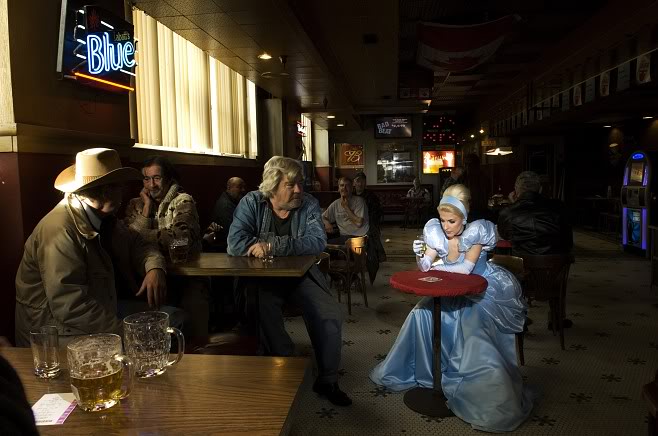
Those are the opening lines of Stephen Sondheim's delightful musical, Into the Woods, sung by none other than Cinderella. Her wish, of course, is to go to the ball ~ or, in Sondheim's lyric, to the festival. She soon discovers what we often forget when we're sure we know what we want: that no wish is made in isolation, and no wish is final. Soon, because of her wish, Cinderella finds herself in the woods, crossing paths with Little Red Riding Hood, Jack (of Beanstalk fame), a childless baker and his wife, a witch . . . all are in that dark, challenging space to learn ~ whether they acknowledge it or not ~ something more about who they are and what their wishes are rooted in. This they do, and by the end of Act. 1, when they have all emerged in one piece from the woods with their wishes granted, they are solidly (with the exception of the witch) in a "Happily Ever After" space. For now.
It is not so much that the boat passed and you failed to notice it. It is more like the boat stopping directly outside your bedroom window, the captain blowing the signal-horn, and band playing a rousing march.
The boat shouted, waving bright flags, its silver hull blinding in the sunlight.
But you had this idea you were going by train.
You kept checking the time-tables, digging for tracks.
And the boat got tired of you, so tired it pulled up the anchor and raised the ramp.
The boat bobbed into the distance shrinking like a toy ~ at which point you probably realized you had always loved the sea.
Naomi Shihab Nye, Missing the Boat
As we begin our meditation session, the teacher asks us to conjure up an image that will ground us. I call to mind the big sugar maple in Wright Park, the one I call Grandmother. We are to imagine that we are actually part of this grounding image, and that it goes down through the earth's crust, to the molten core, tethering us there. Nobody's looking for realism here ~ this is an exercise to help us actively remember that we must have our feet firmly on the ground before we can tap into transforming spiritual energy. No floating away into illusions or attempting to escape into that remarkable, sometimes exhilarating space we may visit during prayer or meditation; we instead welcome the energy of both earth and spirit, remembering that while our experiences there can be extraordinary, we are visitors to that other-worldly realm as long as we are still wearing skin. We always end our meditation by stating our location, our age, and the date so we can safely return home after our spiritual experiences . . . but never forgetting the powerful words of Teilhard de Chardin about our true identity: We are not human beings having a spiritual experience. We are spiritual beings having a human experience. The trick is to truly honor and live out of our deep spiritual selves while remembering that in order to live our lives fully, we must stay present to all that is happening here and now, even as we continue to plan, to dream, and yes, to wish. The miracle is not to walk on water, but to walk on the green earth, the Buddhist monk, Thich Nhat Hanh, reminds us. So I recall that today is Thursday, September 29, 2011. I am 54 years old, sitting in my living room in Tacoma, Washington. I have just experienced a remarkable time of prayer and meditation. And there are dishes in the sink that need washing.
Once upon a time, in the midst of a bustling city, there lived a group of flowering cherry trees. These trees were happy to line both sides of the street, adding to the beauty of their neighborhood. They stood proud and tall, and every spring, at the first sign of warmth, they would begin to sprout lovely blossoms in various shades of pink. Every summer the blossoms would give way to an abundance of leafy green. And every autumn, their leaves would turn a soft yellow before gently tumbling to the ground. All the trees fell into this predictable, comforting rhythm ~ all except for the strange little tree at the end of the street who had this odd habit of blossoming in the fall and dropping her leaves in the spring. Truth be told, most of the time she was blossoming and dropping leaves at the same time. Crazy tree.
Understandably, The Crazy Tree's idiosyncracies did not endear her to the other trees. Because she resisted the pre-ordained schedule of blossoming, leafing, and shedding by marching to a different drummer ~ if such a thing can be said of a tree ~ she made the other trees somewhat uncomfortable. But for the most part they were far too preoccupied with their well-choreographed lives to pay much attention to the disheveled outcast.
Still, they couldn't help but notice that there was something special about The Crazy Tree. It was hard to describe, but it seemed that while they were reasonably happy, The Crazy Tree was alive. Or maybe awake was a better word. The Crazy Tree seemed to know something that the others refused to acknowledge: that life doesn't happen on schedule. And sometimes ~ well, actually, most of the time, she would tell the other trees ~ we are dying and birthing at the same time, letting go and welcoming in the new in a crazy, colorful, blossoming, leaf-dropping dance of life. The Crazy Tree would get so excited when she was talking about this that she would sprout a blossom and drop a leaf just to make her point.
Over the years, the neighborhood association became more and more dismayed by The Crazy Tree's appearance which did not begin to meet their standards of beauty and conformity. And so ~ as often happens to those who challenge our pre-conceived notions of how life is supposed to be ~ The Crazy Tree was killed, cut down before her time on a sunny summer afternoon. Most of the other trees, along with the president of the neighborhood association, were pleased to be rid of this blight on their urban landscape.
But the many walkers and runners who had grown to know and love The Crazy Tree.were deeply saddened when they discovered that she was no longer there. It didn't take long for them to realize, though, that her spirit was still very much alive; and so they started to come by to sit on her stump, just to feel her presence. They claim it is a magical place, a place of crazy wisdom, and every so often, when the wind is just right, they swear they can hear her voice whispering to them. Lately, she's been chanting Rumi:
Dance, when you're broken open. Dance, if you've torn the bandage off. Dance in the middle of the fighting. Dance in your blood. Dance, when you're perfectly free.
And they lived happily ever after . . . Cinderella and her friends, that is. Except that they didn't. They soon discovered that you can't battle giants (or demons or witches) without consequences. Or, to put it in more contemporary terms, we can't look our shadow in the eye ~ individually or collectively ~ without shaking things up. If we choose to live on the surface, we can avoid some of the shaking; but if we wish to do more than live "lives of quiet desperation," as Thoreau put it, we will come to know the challenges of the woods quite well.
So it came to pass that after a time of peace and joy, our friends faced a crisis and ended up back in those woods. No "happily ever after" this time. This time around they experienced death and remorse, but also deep hope and community. Oh, and Cinderella ended up discovering that she never really wanted a prince after all. Now that's a fairy tale I can get my brain around!
And they lived soulfully ever after!
Los cuentos de hadas pueden hacerse realidad, te puede pasar a ti (Primera linea de la canción, Young at Heart/Joven de Corazón, popularizada por Frank Sinatra)
Una amiga mía lo llama El Sindrome Peggy Lee. Tú sabes: su canción famosa Is that all there is? (¿Acaso eso es todo lo que hay?) Recibimos aquello que hemos deseado ~ o lo que pensamos que deseamos ~ y después de la emoción inicial, llega una sensación de vacío que parece tan fuera de lugar. ¿Qué sucedió con eso de "Vivieron felices para siempre"? La verdad, jamás he creído mucho en eso. Tenía un poster en la pared de mi recámara cuando era una feminista incipiente de 16 años: Ella que espera a su príncipe azul tendrá que limpiar detrás de su caballo. Afortunadamente, he madurado un poco desde aquellos tiempos. Sin embargo, parece que hay mucha limpieza que hacer después de conseguir los deseos de nuestros corazones, sean románticos o de otro tipo . La vida, vivida plenamente, es un asunto bastante enredado.
Deseo . . . más que cualquier otra cosa . . . más que la vida
Son las primeras lineas del musical de Stephen Sondheim, Dentro del Bosque (Into the Woods), cantadas por Cenicienta. Su deseo, por supuesto, es poder ir al baile ~ o, en la letra de Sondheim, al festival. Pronto descubre algo que solemos olvidar cuando estamos seguros de que sabemos lo que queremos: que ningún deseo se hace en aislamiento, y ningún deseo es final. Muy pronto, a causa de su deseo, Cenicienta se encuentra dentro del bosque, donde se cruza su camino con Caperucita Roja, Juan (de los frijoles mágicos), un panadero sin hijos y su esposa, una bruja . . . todos están en ese lugar exigente y oscuro para aprender ~ aunque no lo reconozcan ~ algo más de quiénes son y de qué se tratan sus deseos. Esto lo hacen, y para el final del Primer Acto, cuando todos han salido del bosque con sus deseos cumplidos, están firmemente (excepto la bruja) en un espacio de "Happily Ever After." Por ahora.
(Traducción de la canción a continuación)
(Traducción de la canción)
Y sucedió que todo lo que estaba equivocado fue corregido, los reinos se llenaron de alegría, y todos los que lo merecían estaban destinados a vivir una larga vida feliz.
Ever after (para siempre) . . .
Jornada terminada, todo compuesto,
No sólo para hoy
Sino mañana, y extendido
Ever after!
Todas las maldiciones terminadas,
Los reversos desaparecidos
Sólo la ternura y la alegría
Ever after!
Felices ahora y felices mañana
Y felices para siempre!
Había peligros
Y confusiones
Y los senderos muchas veces se torcieron
Había constantes . . .
desilusiones
Pero nunca perdieron su nervio
Y llegaron a las conclusiones correctas!
Y recibieron lo que merecían
Sin suspiros y sin tristeza
La ternura y la risa
La alegría hoy y felicidad mañana
Y para siempre (Entran las hermanastras de Cenicienta)
Era codiciosa
era vanidosa
era arrogante
era engreída
Estábamos felices
Fue divertido
Pero éramos ciegas
Entonces fuimos dentro del bosque
a conseguir nuestros deseos
y ahora somos ciegas de verdad (Entra la bruja, ahora bella)
Era perfecta
Tenía todo menos la hermosura
Tenía el poder
Y una hija como una flor
En una torre
Entonces fui dentro del bosque
a conseguir mi deseo,
Y ahora soy ordinaria
Perdí mi poder y mi flor
. . . .
Aunque sea miedoso
Aunque sea profundo y oscuro
y pierdas el sendero
Aunque encuentres lobos
No debes desviar ni contemplar
No sólo tienes que desear ~
No, para conseguir tu deseo
Dentro del bosque para quitar el hechizo
Dentro del bosque para perder el anhelo
Dentro del bosque para tener un hijo
A casarse con el príncipe
A conseguir el dinero
A salvar la casa
A matar al lobo
A encontrar al padre
A conquistar el reino,
Tener, casar, conseguir, salvar, matar, guardar
Para ir al festival!
Dentro del bosque
Dentro del bosque
Dentro del bosque
Entonces fuera del bosque.
Narrador: Continuará
Todos: Y felices para siempre.
___________________________
No es que el barco te pasó sin que te dieras cuenta. Más bien podríamos decir que el barco se paró directamente enfrente de la ventana de tu recámara, el capitán haciendo sonar la sirena, y la banda tocando una marcha triunfal.
El barco gritó, agitando sus banderas de colores brillantes, su casco de plata brillando a la luz del sol.
Pero tú tenías la idea de que ibas por tren.
Seguiste mirando el horario, excavando por las rieles.
Y el barco se cansó de ti, tan cansado que recogió el ancla y subió la rampa.
El barco empezó a alejarse, achicándose como un juguete ~ y en ese momento probablemente te diste cuenta que siempre habías amado la mar.
Perdiendo el Barco, Naomi Shihab Nye
Mientras empezamos nuestra sesión de meditación, la maestra nos invita a imaginar una imagen de cimentación. Visualizo el gran arbol de maple en el parque, a quien yo llamo Grandmother. Imaginamos que somos parte de esta imagen y que se adentra en el suelo, pasando por la corteza terrestre hasta conectarse con el centro de la tierra. No estamos buscando el realismo ~ es un ejercicio para ayudarnos a recordar, de una manera activa, que debemos tener los pies plantados firmemente en la tierra antes de acceder la energía espiritual. No se permite flotar en las ilusiones ni tratar de escapar a ese espacio maravilloso ~ y a veces estimulante ~ que visitamos de vez en cuando durante la meditación o la oración; en cambio acogemos la energía de la tierra y del espíritu, recordando que aunque nuestras experiencias allí pueden ser extraordinarias, somos visitantes a esa esfera mística mientras llevamos la piel humana. Siempre terminamos nuestra meditación diciendo nuestra ubicación, nuestra edad, y la fecha actual para poder regresar bien después de nuestras experiencias espirituales . . . pero sin olvidar las palabras poderosas de Teilhard de Chardin, hablando de nuestra identidad verdadera: No somos seres humanos teniendo una experiencia espiritual. Somos seres espirituales teniendo una experiencia humana. El secreto es honrar profundamente y vivir desde el fondo de nuestra identidad espiritual mientras recordamos que para vivir plenamente, debemos mantenernos presentes a todo lo que está sucediendo aquí y ahora, aun mientras seguimos planeando, soñando, y sí, deseando. El milagro no es caminar en el agua, sino caminar en la tierra verde, nos recuerda el monje budista, Thich Nhat Hanh. Así que recuerdo que hoy es jueves, el 29 de septiembre, 2011. Tengo 54 años, y estoy sentada en mi sala en Tacoma, Washington. Acabo de experimentar un tiempo excepcional de oración y meditación. Y en el fregadero hay trastes sucios que necesito lavar.
Había una vez, en medio de la ciudad, un grupo de cerezos florecientes. Estos cerezos estaban felices de decorar ambos lados de la calle, compartiendo su hermosura con su vecinidad. Se pararon ahí orgullosos y altos, y cada primavera, al primer indicio del calor, brotaban bellas flores rosas. Cada verano las flores daban lugar a la abundancia de hojas verdes; y cada otoño, las hojas se ponían un bello tono de amarillo antes de caerse suavemente al suelo. Todos los cerezos siguieron este ritmo confortante y estable ~ todos menos el arbol extraño al final de la calle, quien tenía el hábito raro de brotar flores en el otoño y dejar caer sus hojas en la primavera. A decir verdad, la mayoría del tiempo brotaba y dejaba caer sus hojas a la vez. Crazy tree.
No hace falta decir que las idiosincrasias de la Crazy Tree no le granjearon el cariño de los otros árboles. Ya que resistió el horario de brotar flores, echar hojas, y dejarlas caer, moviendo contra la corriente (si se podría decir eso acerca de un arbol) ~ la Crazy Tree hizo que los otros árboles se sintieran un tanto incómodos. Pero por lo general estaban demasiado preocupados con sus vidas bien planeadas para prestar mucha atención a esta paria desarrapada.
Pero no podían dejar de notar que la Crazy Tree tenía algo especial. Fue difícil de describir, pero parecía que mientras ellos se sentían más o menos felices, la Crazy Tree estaba viva. O quizás despierta fuera mejor descripción. Parecía que la Crazy Tree sabía algo que los otros se negaron a reconocer: que la vida no sucede según un horario. Y a veces ~ pues, la verdad es que la mayoría del tiempo, ella les decía ~ estamos muriendo y naciendo al mismo tiempo, soltando las cosas y acogiendo lo nuevo en un baile loco y apasionado, lleno de flores rosas y hojas caídas. Al hablar de esto, la Crazy Tree se entusiasmaba tanto que brotaba una flor y dejaba caer una hoja para dar énfasis a su argumento.
Con el paso de los años, la asociación de la vecinidad se puso más impaciente con la apariencia de la Crazy Tree ya que no cumplía con los requisitos de la hermosura y la conformidad. Y sucedió ~ como frecuentemente les pasa a los que desafían las ideas pre-concebidas de como debe ser la vida ~ que mataron a la Crazy Tree, talada antes de tiempo en una tarde soleada de verano. La mayoría de los otros árboles, juntos con el presidente de la asociación de la vecinidad, se sintieron felices de estar libres de esta fealdad en su paisaje urbano.
Mientras tanto, muchas de las personas que caminaban o corrían por la vecinidad habían llegado a conocer y amar a la Crazy Tree y se sintieron profundamente tristes cuando descubrieron que ya no estaba ahí. Pero no pasó mucho tiempo antes de que se dieran cuenta que su espíritu todavía estaba muy vivo; así que empezaron a pasar por ahí a sentarse en su tocón para sentir su presencia. Dicen que es un lugar mágico, un lugar lleno de la sabiduría loca, y que de vez en cuando, cuando el viento es leve, soplando desde el sur, juran que pueden oír su voz, susurrándoles. Últimamente, ha estado cantando versos de Rumi:
Baila cuando estás roto como un jarro abierto Baila cuando te has agarrado la venda Baila en medio de la pelea Baila en tu sangre Baila, cuando estés perfectamente libre.
Y vivieron felices para siempre . . . Cenicienta y sus amigos. Sólo que no lo hicieron. Pronto descubrieron que no puedes batallar a los gigantes (o demonios o brujas) sin consecuencias. O, para expresarlo en términos más contemporaneos, no podemos explorar nuestra sombra ~ sea individualmente o colectivamente ~ sin darle un vuelco a nuestras vidas. Si nos decidimos vivir en la superficie, podemos evitar un poco de la turbulencia; pero si deseamos vivir algo más que una vida de tranquila desesperación, como dice Thoreau, llegaremos a conocer muy bien el bosque y los desafíos que nos esperan ahí.
Así que sucedió que después de un tiempo de paz y alegría, nuestros amigos se enfrentaron a una crisis y volvieron a entrar al bosque. Esta vez no había un fin de "felices para siempre". Esta vez experimentaron la muerte y el arrepentimiento, pero también la esperanza profunda y la comunidad. Ah, y Cenicienta descubrió que después de todo, nunca había querido tener un príncipe. ¡Eso sí es un cuento de hadas que puedo comprender!