

A friend of mine refers to it as The Peggy Lee Syndrome. You know: Is that all there is? We get what we want ~ or what we think we want ~ and then, after the initial excitement, there is a feeling of emptiness that seems so out of place. Whatever happened to Happily Ever After? Not that I've ever really believed in it much. The poster I had on my bedroom wall when I was a 16 year-old budding feminist said it all: She who waits for her prince will have to clean up after his horse. Happy to say I've mellowed out a bit since those days. Still, it does seem that there's always a lot of cleaning up to do after we get our heart's desire, romantic or otherwise. Life, lived fully, is an awfully messy business.
I wish . . . more than anything . . . more than life . . .
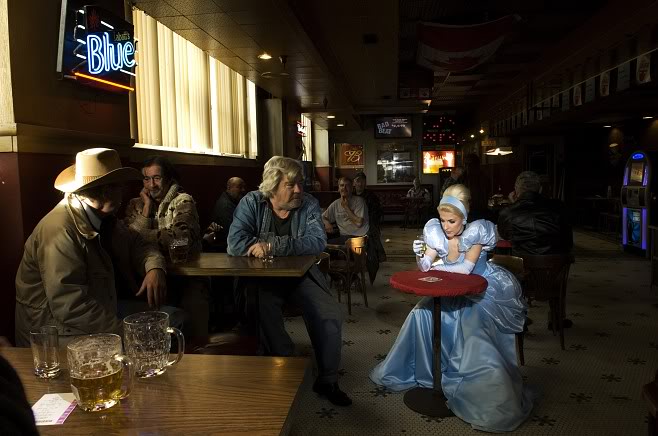
Those are the opening lines of Stephen Sondheim's delightful musical, Into the Woods, sung by none other than Cinderella. Her wish, of course, is to go to the ball ~ or, in Sondheim's lyric, to the festival. She soon discovers what we often forget when we're sure we know what we want: that no wish is made in isolation, and no wish is final. Soon, because of her wish, Cinderella finds herself in the woods, crossing paths with Little Red Riding Hood, Jack (of Beanstalk fame), a childless baker and his wife, a witch . . . all are in that dark, challenging space to learn ~ whether they acknowledge it or not ~ something more about who they are and what their wishes are rooted in. This they do, and by the end of Act. 1, when they have all emerged in one piece from the woods with their wishes granted, they are solidly (with the exception of the witch) in a "Happily Ever After" space. For now.
It is not so much that the boat passed
and you failed to notice it.
It is more like the boat stopping
directly outside your bedroom window,
the captain blowing the signal-horn,
and band playing a rousing march.
The boat shouted, waving bright flags,
its silver hull blinding in the sunlight.
But you had this idea you were going by train.
You kept checking the time-tables,
digging for tracks.
And the boat got tired of you,
so tired it pulled up the anchor
and raised the ramp.
The boat bobbed into the distance
shrinking like a toy ~
at which point you probably realized
you had always loved the sea.
Naomi Shihab Nye, Missing the Boat
As we begin our meditation session, the teacher asks us to conjure up an image that will ground us. I call to mind the big sugar maple in Wright Park, the one I call Grandmother. We are to imagine that we are actually part of this grounding image, and that it goes down through the earth's crust, to the molten core, tethering us there. Nobody's looking for realism here ~ this is an exercise to help us actively remember that we must have our feet firmly on the ground before we can tap into transforming spiritual energy. No floating away into illusions or attempting to escape into that remarkable, sometimes exhilarating space we may visit during prayer or meditation; we instead welcome the energy of both earth and spirit, remembering that while our experiences there can be extraordinary, we are visitors to that other-worldly realm as long as we are still wearing skin. We always end our meditation by stating our location, our age, and the date so we can safely return home after our spiritual experiences . . . but never forgetting the powerful words of Teilhard de Chardin about our true identity: We are not human beings having a spiritual experience. We are spiritual beings having a human experience. The trick is to truly honor and live out of our deep spiritual selves while remembering that in order to live our lives fully, we must stay present to all that is happening here and now, even as we continue to plan, to dream, and yes, to wish. The miracle is not to walk on water, but to walk on the green earth, the Buddhist monk, Thich Nhat Hanh, reminds us. So I recall that today is Thursday, September 29, 2011. I am 54 years old, sitting in my living room in Tacoma, Washington. I have just experienced a remarkable time of prayer and meditation. And there are dishes in the sink that need washing.

Once upon a time, in the midst of a bustling city, there lived a group of flowering cherry trees. These trees were happy to line both sides of the street, adding to the beauty of their neighborhood. They stood proud and tall, and every spring, at the first sign of warmth, they would begin to sprout lovely blossoms in various shades of pink. Every summer the blossoms would give way to an abundance of leafy green. And every autumn, their leaves would turn a soft yellow before gently tumbling to the ground. All the trees fell into this predictable, comforting rhythm ~ all except for the strange little tree at the end of the street who had this odd habit of blossoming in the fall and dropping her leaves in the spring. Truth be told, most of the time she was blossoming and dropping leaves at the same time. Crazy tree.
Understandably, The Crazy Tree's idiosyncracies did not endear her to the other trees. Because she resisted the pre-ordained schedule of blossoming, leafing, and shedding by marching to a different drummer ~ if such a thing can be said of a tree ~ she made the other trees somewhat uncomfortable. But for the most part they were far too preoccupied with their well-choreographed lives to pay much attention to the disheveled outcast.
Still, they couldn't help but notice that there was something special about The Crazy Tree. It was hard to describe, but it seemed that while they were reasonably happy, The Crazy Tree was alive. Or maybe awake was a better word. The Crazy Tree seemed to know something that the others refused to acknowledge: that life doesn't happen on schedule. And sometimes ~ well, actually, most of the time, she would tell the other trees ~ we are dying and birthing at the same time, letting go and welcoming in the new in a crazy, colorful, blossoming, leaf-dropping dance of life. The Crazy Tree would get so excited when she was talking about this that she would sprout a blossom and drop a leaf just to make her point.
Over the years, the neighborhood association became more and more dismayed by The Crazy Tree's appearance which did not begin to meet their standards of beauty and conformity. And so ~ as often happens to those who challenge our pre-conceived notions of how life is supposed to be ~ The Crazy Tree was killed, cut down before her time on a sunny summer afternoon. Most of the other trees, along with the president of the neighborhood association, were pleased to be rid of this blight on their urban landscape.
But the many walkers and runners who had grown to know and love The Crazy Tree.were deeply saddened when they discovered that she was no longer there. It didn't take long for them to realize, though, that her spirit was still very much alive; and so they started to come by to sit on her stump, just to feel her presence. They claim it is a magical place, a place of crazy wisdom, and every so often, when the wind is just right, they swear they can hear her voice whispering to them. Lately, she's been chanting Rumi:
Dance, when you're broken open.
Dance, if you've torn the bandage off.
Dance in the middle of the fighting.
Dance in your blood.
Dance, when you're perfectly free.
And they lived happily ever after . . . Cinderella and her friends, that is. Except that they didn't. They soon discovered that you can't battle giants (or demons or witches) without consequences. Or, to put it in more contemporary terms, we can't look our shadow in the eye ~ individually or collectively ~ without shaking things up. If we choose to live on the surface, we can avoid some of the shaking; but if we wish to do more than live "lives of quiet desperation," as Thoreau put it, we will come to know the challenges of the woods quite well.
So it came to pass that after a time of peace and joy, our friends faced a crisis and ended up back in those woods. No "happily ever after" this time. This time around they experienced death and remorse, but also deep hope and community. Oh, and Cinderella ended up discovering that she never really wanted a prince after all. Now that's a fairy tale I can get my brain around!
And they lived soulfully ever after!
Los cuentos de hadas pueden hacerse realidad, te puede pasar a ti
(Primera linea de la canción, Young at Heart/Joven de Corazón, popularizada por Frank Sinatra)
Una amiga mía lo llama El Sindrome Peggy Lee. Tú sabes: su canción famosa Is that all there is? (¿Acaso eso es todo lo que hay?) Recibimos aquello que hemos deseado ~ o lo que pensamos que deseamos ~ y después de la emoción inicial, llega una sensación de vacío que parece tan fuera de lugar. ¿Qué sucedió con eso de "Vivieron felices para siempre"? La verdad, jamás he creído mucho en eso. Tenía un poster en la pared de mi recámara cuando era una feminista incipiente de 16 años: Ella que espera a su príncipe azul tendrá que limpiar detrás de su caballo. Afortunadamente, he madurado un poco desde aquellos tiempos. Sin embargo, parece que hay mucha limpieza que hacer después de conseguir los deseos de nuestros corazones, sean románticos o de otro tipo . La vida, vivida plenamente, es un asunto bastante enredado.
Deseo . . . más que cualquier otra cosa . . . más que la vida
Son las primeras lineas del musical de Stephen Sondheim, Dentro del Bosque (Into the Woods), cantadas por Cenicienta. Su deseo, por supuesto, es poder ir al baile ~ o, en la letra de Sondheim, al festival. Pronto descubre algo que solemos olvidar cuando estamos seguros de que sabemos lo que queremos: que ningún deseo se hace en aislamiento, y ningún deseo es final. Muy pronto, a causa de su deseo, Cenicienta se encuentra dentro del bosque, donde se cruza su camino con Caperucita Roja, Juan (de los frijoles mágicos), un panadero sin hijos y su esposa, una bruja . . . todos están en ese lugar exigente y oscuro para aprender ~ aunque no lo reconozcan ~ algo más de quiénes son y de qué se tratan sus deseos. Esto lo hacen, y para el final del Primer Acto, cuando todos han salido del bosque con sus deseos cumplidos, están firmemente (excepto la bruja) en un espacio de "Happily Ever After." Por ahora.
(Traducción de la canción a continuación)
(Traducción de la canción)
Y sucedió que todo lo que estaba equivocado fue corregido, los reinos se llenaron de alegría, y todos los que lo merecían estaban destinados a vivir una larga vida feliz.
Ever after (para siempre) . . .
Jornada terminada, todo compuesto,
No sólo para hoy
Sino mañana, y extendido
Ever after!
Todas las maldiciones terminadas,
Los reversos desaparecidos
Sólo la ternura y la alegría
Ever after!
Felices ahora y felices mañana
Y felices para siempre!
Había peligros
Y confusiones
Y los senderos muchas veces se torcieron
Había constantes . . .
desilusiones
Pero nunca perdieron su nervio
Y llegaron a las conclusiones correctas!
Y recibieron lo que merecían
Sin suspiros y sin tristeza
La ternura y la risa
La alegría hoy y felicidad mañana
Y para siempre
(Entran las hermanastras de Cenicienta)
Era codiciosa
era vanidosa
era arrogante
era engreída
Estábamos felices
Fue divertido
Pero éramos ciegas
Entonces fuimos dentro del bosque
a conseguir nuestros deseos
y ahora somos ciegas de verdad
(Entra la bruja, ahora bella)
Era perfecta
Tenía todo menos la hermosura
Tenía el poder
Y una hija como una flor
En una torre
Entonces fui dentro del bosque
a conseguir mi deseo,
Y ahora soy ordinaria
Perdí mi poder y mi flor
. . . .
Aunque sea miedoso
Aunque sea profundo y oscuro
y pierdas el sendero
Aunque encuentres lobos
No debes desviar ni contemplar
No sólo tienes que desear ~
No, para conseguir tu deseo
Dentro del bosque para quitar el hechizo
Dentro del bosque para perder el anhelo
Dentro del bosque para tener un hijo
A casarse con el príncipe
A conseguir el dinero
A salvar la casa
A matar al lobo
A encontrar al padre
A conquistar el reino,
Tener, casar, conseguir, salvar, matar, guardar
Para ir al festival!
Dentro del bosque
Dentro del bosque
Dentro del bosque
Entonces fuera del bosque.
Narrador: Continuará
Todos: Y felices para siempre.
___________________________
No es que el barco
te pasó sin que te dieras cuenta.
Más bien podríamos decir que el barco
se paró directamente enfrente de la ventana de tu recámara,
el capitán haciendo sonar la sirena,
y la banda tocando una marcha triunfal.
El barco gritó,
agitando sus banderas de colores brillantes,
su casco de plata brillando a la luz del sol.
Pero tú tenías la idea de que ibas por tren.
Seguiste mirando el horario,
excavando por las rieles.
Y el barco se cansó de ti,
tan cansado que recogió el ancla
y subió la rampa.
El barco empezó a alejarse,
achicándose como un juguete ~
y en ese momento
probablemente te diste cuenta que
siempre habías amado la mar.
Perdiendo el Barco, Naomi Shihab Nye
Mientras empezamos nuestra sesión de meditación, la maestra nos invita a imaginar una imagen de cimentación. Visualizo el gran arbol de maple en el parque, a quien yo llamo Grandmother. Imaginamos que somos parte de esta imagen y que se adentra en el suelo, pasando por la corteza terrestre hasta conectarse con el centro de la tierra. No estamos buscando el realismo ~ es un ejercicio para ayudarnos a recordar, de una manera activa, que debemos tener los pies plantados firmemente en la tierra antes de acceder la energía espiritual. No se permite flotar en las ilusiones ni tratar de escapar a ese espacio maravilloso ~ y a veces estimulante ~ que visitamos de vez en cuando durante la meditación o la oración; en cambio acogemos la energía de la tierra y del espíritu, recordando que aunque nuestras experiencias allí pueden ser extraordinarias, somos visitantes a esa esfera mística mientras llevamos la piel humana. Siempre terminamos nuestra meditación diciendo nuestra ubicación, nuestra edad, y la fecha actual para poder regresar bien después de nuestras experiencias espirituales . . . pero sin olvidar las palabras poderosas de Teilhard de Chardin, hablando de nuestra identidad verdadera: No somos seres humanos teniendo una experiencia espiritual. Somos seres espirituales teniendo una experiencia humana. El secreto es honrar profundamente y vivir desde el fondo de nuestra identidad espiritual mientras recordamos que para vivir plenamente, debemos mantenernos presentes a todo lo que está sucediendo aquí y ahora, aun mientras seguimos planeando, soñando, y sí, deseando. El milagro no es caminar en el agua, sino caminar en la tierra verde, nos recuerda el monje budista, Thich Nhat Hanh. Así que recuerdo que hoy es jueves, el 29 de septiembre, 2011. Tengo 54 años, y estoy sentada en mi sala en Tacoma, Washington. Acabo de experimentar un tiempo excepcional de oración y meditación. Y en el fregadero hay trastes sucios que necesito lavar.

Había una vez, en medio de la ciudad, un grupo de cerezos florecientes. Estos cerezos estaban felices de decorar ambos lados de la calle, compartiendo su hermosura con su vecinidad. Se pararon ahí orgullosos y altos, y cada primavera, al primer indicio del calor, brotaban bellas flores rosas. Cada verano las flores daban lugar a la abundancia de hojas verdes; y cada otoño, las hojas se ponían un bello tono de amarillo antes de caerse suavemente al suelo. Todos los cerezos siguieron este ritmo confortante y estable ~ todos menos el arbol extraño al final de la calle, quien tenía el hábito raro de brotar flores en el otoño y dejar caer sus hojas en la primavera. A decir verdad, la mayoría del tiempo brotaba y dejaba caer sus hojas a la vez. Crazy tree.
No hace falta decir que las idiosincrasias de la Crazy Tree no le granjearon el cariño de los otros árboles. Ya que resistió el horario de brotar flores, echar hojas, y dejarlas caer, moviendo contra la corriente (si se podría decir eso acerca de un arbol) ~ la Crazy Tree hizo que los otros árboles se sintieran un tanto incómodos. Pero por lo general estaban demasiado preocupados con sus vidas bien planeadas para prestar mucha atención a esta paria desarrapada.
Pero no podían dejar de notar que la Crazy Tree tenía algo especial. Fue difícil de describir, pero parecía que mientras ellos se sentían más o menos felices, la Crazy Tree estaba viva. O quizás despierta fuera mejor descripción. Parecía que la Crazy Tree sabía algo que los otros se negaron a reconocer: que la vida no sucede según un horario. Y a veces ~ pues, la verdad es que la mayoría del tiempo, ella les decía ~ estamos muriendo y naciendo al mismo tiempo, soltando las cosas y acogiendo lo nuevo en un baile loco y apasionado, lleno de flores rosas y hojas caídas. Al hablar de esto, la Crazy Tree se entusiasmaba tanto que brotaba una flor y dejaba caer una hoja para dar énfasis a su argumento.
Con el paso de los años, la asociación de la vecinidad se puso más impaciente con la apariencia de la Crazy Tree ya que no cumplía con los requisitos de la hermosura y la conformidad. Y sucedió ~ como frecuentemente les pasa a los que desafían las ideas pre-concebidas de como debe ser la vida ~ que mataron a la Crazy Tree, talada antes de tiempo en una tarde soleada de verano. La mayoría de los otros árboles, juntos con el presidente de la asociación de la vecinidad, se sintieron felices de estar libres de esta fealdad en su paisaje urbano.
Mientras tanto, muchas de las personas que caminaban o corrían por la vecinidad habían llegado a conocer y amar a la Crazy Tree y se sintieron profundamente tristes cuando descubrieron que ya no estaba ahí. Pero no pasó mucho tiempo antes de que se dieran cuenta que su espíritu todavía estaba muy vivo; así que empezaron a pasar por ahí a sentarse en su tocón para sentir su presencia. Dicen que es un lugar mágico, un lugar lleno de la sabiduría loca, y que de vez en cuando, cuando el viento es leve, soplando desde el sur, juran que pueden oír su voz, susurrándoles. Últimamente, ha estado cantando versos de Rumi:
Baila cuando estás roto como un jarro abierto
Baila cuando te has agarrado la venda
Baila en medio de la pelea
Baila en tu sangre
Baila, cuando estés perfectamente libre.
Y vivieron felices para siempre . . . Cenicienta y sus amigos. Sólo que no lo hicieron. Pronto descubrieron que no puedes batallar a los gigantes (o demonios o brujas) sin consecuencias. O, para expresarlo en términos más contemporaneos, no podemos explorar nuestra sombra ~ sea individualmente o colectivamente ~ sin darle un vuelco a nuestras vidas. Si nos decidimos vivir en la superficie, podemos evitar un poco de la turbulencia; pero si deseamos vivir algo más que una vida de tranquila desesperación, como dice Thoreau, llegaremos a conocer muy bien el bosque y los desafíos que nos esperan ahí.
Así que sucedió que después de un tiempo de paz y alegría, nuestros amigos se enfrentaron a una crisis y volvieron a entrar al bosque. Esta vez no había un fin de "felices para siempre". Esta vez experimentaron la muerte y el arrepentimiento, pero también la esperanza profunda y la comunidad. Ah, y Cenicienta descubrió que después de todo, nunca había querido tener un príncipe. ¡Eso sí es un cuento de hadas que puedo comprender!
Y vivieron plenamente para siempre!


